North Macedonia
25 713 sq km (9 928 sq mi)
about 2.07 mil people
Skopje
Macedonian
Christianity 65%, Islam 33%, other 2%
Denar (MKD), 1 EUR = around 61 Denar
GMT (London) + 1 hour; CET + 0 hours
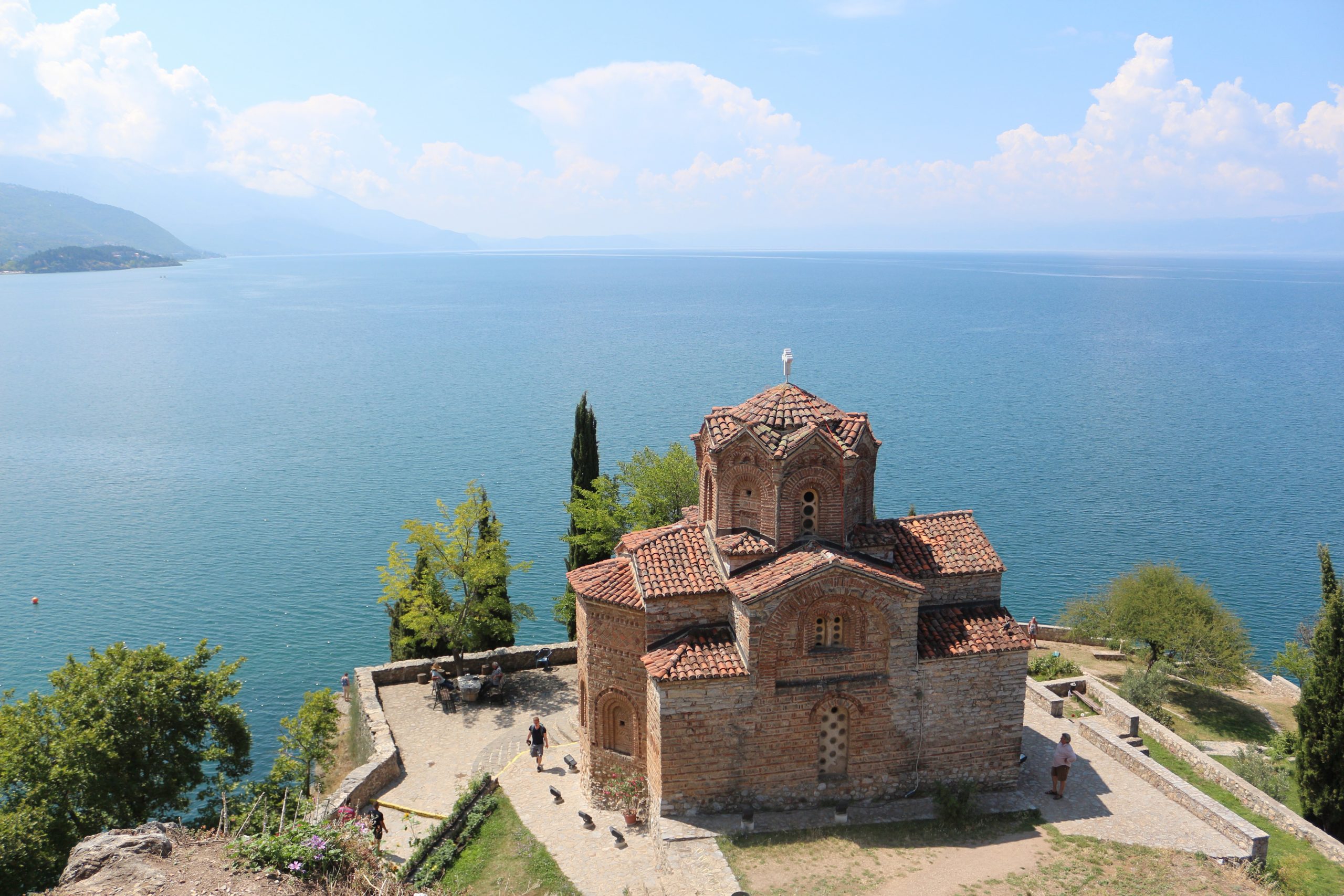
While easily accessible from abroad and equipped with all the comforts of the Western world, the Republic of North Macedonia remains one of Europe’s last undiscovered gems. It is a natural paradise of mountains, lakes, and rivers, where life moves at a different pace amid the grandeur of ancient ruins and charming villages that have remained largely unchanged for centuries. The majority population is ethnic Macedonian and Orthodox Christian, with a significant Albanian Muslim minority. This blend creates a unique mix of architectural and cultural heritage. North Macedonia truly represents the Balkans, showcasing a fascinating fusion of Macedonian, Albanian, Turkish, and Mediterranean influences.
North Macedonia is home to many beautiful Orthodox churches, monasteries, and Ottoman mosques. The country’s history is marked by its long period under Ottoman rule, which lasted for 500 years and inspired legendary Macedonian revolutionaries such as Goce Delčev, Nikola Karev, and Pitu Guli to lead uprisings aimed at securing freedom for Macedonia.
Throughout history, North Macedonia has been part of various states, but it was never recognized as an independent administrative entity until its incorporation into Yugoslavia under Tito in 1945. The country experienced significant development during Tito’s rule, especially after the capital, Skopje, was rebuilt following a devastating earthquake in 1963. The Yugoslav government invested heavily in rebuilding infrastructure, a legacy that explains why many Macedonians feel some nostalgia for the Yugoslav era.
North Macedonia declared independence from Yugoslavia in 1991, but international recognition was delayed due to Greece’s objection over the use of what it considered a “Hellenic name and symbols.” Greece lifted its trade blockade in 1995, and despite ongoing disagreements over the name “Macedonia,” the two countries normalized relations. Today, Greece is the largest investor in North Macedonia.
Ethnic tensions remain a challenge in North Macedonia, largely due to its sizable Albanian minority, which makes up about 25% of the population. An armed insurgency by ethnic Albanians in 2001, as well as the status of neighboring Kosovo, continue to be sources of friction. Additionally, tensions surfaced during the parliamentary elections on June 2, 2008, though these were primarily between supporters of the two largest rival Albanian political parties.
The Monastery of St. John the Baptist is renowned for its exquisite iconostasis, crafted by Petre Filipov – known as Garkata –
Citizens of EU/EFTA countries, Albania, and Serbia can enter North Macedonia with a valid officially issued ID card or passport.
Nationals of the following countries do not require a visa to enter:
Albania, Andorra, Antigua and Barbuda, Argentina, Australia, Austria, Bahamas, Barbados, Belgium, Bosnia and Herzegovina, Botswana, Brazil, Brunei, Bulgaria, Canada, Chile, Costa Rica, Croatia, Cuba, Cyprus, Czech Republic, Denmark, Ecuador, El Salvador, Estonia, Finland, France, Germany, Greece, Guatemala, Holy See, Honduras, Hong Kong, Hungary, Iceland, Ireland, Israel, Italy, Japan, Kosovo, Latvia, Lithuania, Liechtenstein, Luxembourg, Macao, Malaysia, Malta, Mauritius, Mexico, Monaco, Montenegro, Netherlands, New Zealand, Nicaragua, Norway, Panama, Paraguay, Peru, Poland, Portugal, Romania, Saint Kitts and Nevis, San Marino, Seychelles, Singapore, Slovakia, Slovenia, Serbia, Switzerland, Sweden, Spain, Turkey, UK, Ukraine, USA, Uruguay, and Venezuela.
The visa-free stay is generally up to 90 days, except for nationals of Turkey, Japan, and Montenegro, who have a visa-free stay limit of 60 days.
Foreign nationals who normally require a visa to enter North Macedonia may enter without one if they hold a valid permanent residence permit from an EU or Schengen member state, or possess a valid multiple-entry Schengen C-type visa. For more details, please consult the Ministry of Foreign Affairs of the Republic of North Macedonia.
from the village of Gari. Alongside his brother Mark Filipov, Makrarij Frchkovski from Galichnik, and Abraham Dichov with his sons Vasil and Filip from Filipovci Osoj, Petre worked between 1829 and 1835 to create this beautiful wooden masterpiece.
The iconostasis is divided into six horizontal bands. The first band consists mainly of rectangular panels adorned with floral and fauna motifs. The second band features the throne icons and is topped by a figure of an eagle with outstretched wings. The third band is subdivided into three smaller horizontal sections, symmetrically decorated with angels, grapes, vines, and other motifs. Above these are two rows of icons depicting apostles. At the center stands a large cross illustrating the Crucifixion of Christ. On either side of the cross are dragon figures, whose mouths frame the icons of John the Baptist and the Virgin Mary.
Citizens of EU/EFTA countries, Albania, and Serbia can enter North Macedonia with a valid officially issued ID card or passport.
Nationals of the following countries do not require a visa to enter:
Albania, Andorra, Antigua and Barbuda, Argentina, Australia, Austria, Bahamas, Barbados, Belgium, Bosnia and Herzegovina, Botswana, Brazil, Brunei, Bulgaria, Canada, Chile, Costa Rica, Croatia, Cuba, Cyprus, Czech Republic, Denmark, Ecuador, El Salvador, Estonia, Finland, France, Germany, Greece, Guatemala, Holy See, Honduras, Hong Kong, Hungary, Iceland, Ireland, Israel, Italy, Japan, Kosovo, Latvia, Lithuania, Liechtenstein, Luxembourg, Macao, Malaysia, Malta, Mauritius, Mexico, Monaco, Montenegro, Netherlands, New Zealand, Nicaragua, Norway, Panama, Paraguay, Peru, Poland, Portugal, Romania, Saint Kitts and Nevis, San Marino, Seychelles, Singapore, Slovakia, Slovenia, Serbia, Switzerland, Sweden, Spain, Turkey, UK, Ukraine, USA, Uruguay, and Venezuela.
The visa-free stay is generally up to 90 days, except for nationals of Turkey, Japan, and Montenegro, who have a visa-free stay limit of 60 days.
Foreign nationals who normally require a visa to enter North Macedonia may enter without one if they hold a valid permanent residence permit from an EU or Schengen member state, or possess a valid multiple-entry Schengen C-type visa. For more details, please consult the Ministry of Foreign Affairs of the Republic of North Macedonia.
Credits: Macedonia by Wikitravel and Macedonia Timeless